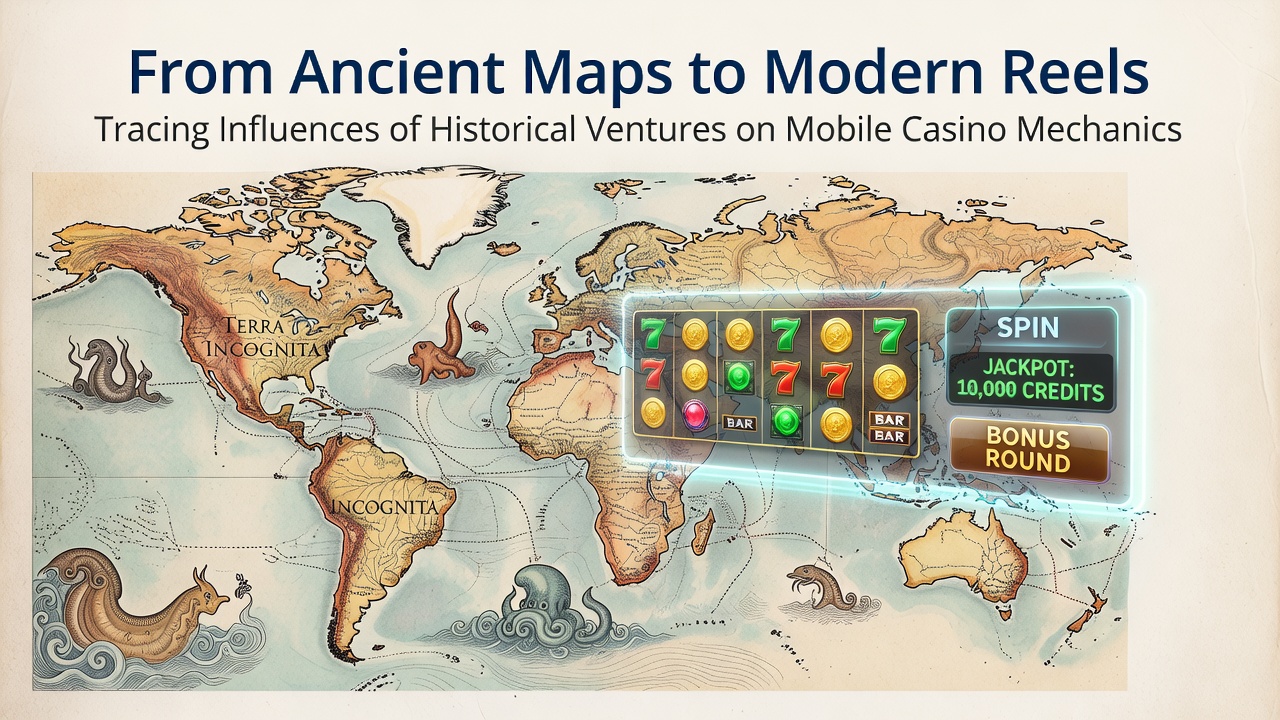
From Ancient Maps to Modern Reels: Tracing Influences of Historical Ventures on Mobile Casino Mechanics
Exploration history supplies a clear lineage for many features found in today's mobile casino games, where cartographic traditions and expedition records shape interface layouts, symbol sets, and progression systems. Cartographers from the fifteenth century onward developed grid systems and route markers that parallel the waypoint mechanics players encounter in exploration-themed slots, and those same visual conventions appear in reel arrangements that guide users across virtual territories.
Cartographic Traditions and Game Navigation
Medieval portolan charts recorded wind patterns and coastal landmarks with intersecting lines that divided seas into measurable segments, and developers later adapted similar grid divisions when constructing bonus maps in mobile titles. Players advance across segmented zones by completing tasks that mirror the distance calculations once performed with compass and astrolabe, while the games retain the same north-oriented orientation that standardized European navigation after 1300. Data from the American Gaming Association shows mobile slot sessions incorporating map-based bonuses rose steadily through 2025, reflecting sustained interest in these layered navigation structures.
Expedition Records and Symbol Design
Logbooks from Pacific voyages documented trade goods, flora, and navigational hazards that later supplied iconography for reel symbols. Compass roses, sextants, and annotated coastlines function as high-value icons because they carry documented historical weight, and studios reference primary sources such as the journals of Cook and Vancouver when rendering these elements at higher resolutions for retina displays. The same logs recorded seasonal wind shifts that influenced sailing schedules, and several current mechanics replicate those patterns through timed free-spin cycles that activate according to in-game calendars tied to real historical sailing seasons.

Route Mapping and Tiered Rewards
Trade route ledgers maintained by merchant companies in the seventeenth century tracked cumulative distances and cargo values, and those cumulative tallies translate directly into the loyalty ladders found in many portable platforms. Each completed stage unlocks additional reel modifiers or multiplier tiers, replicating the staged payments recorded in the original manifests. Research published by the University of Nevada, Las Vegas Center for Gaming Research documents how these cumulative systems maintain session length across multiple device sessions, and the pattern matches the multi-leg voyages that required repeated resupply stops.
October 2026 Platform Updates
Platform operators announced several updates scheduled for October 2026 that extend these historical references further. New map layers will incorporate latitude markings drawn from eighteenth-century surveys, and the added precision changes the visual scaling of bonus zones without altering payout mathematics. Regulatory filings submitted to the Nevada Gaming Control Board list these visual refinements as standard content patches rather than mechanical alterations, confirming that the underlying random number generators remain unchanged.
Sound and Interface Echoes
Audio design teams draw from documented shipboard signals such as bell patterns used to mark watches, and those rhythmic sequences appear in win notifications and transition cues. Interface elements also retain the parchment texture and ink-wash gradients common to surviving charts, because eye-tracking studies indicate these textures reduce visual fatigue during extended play on smaller screens. Observers note that the combination of historical visual cues and modern touch controls produces a consistent interaction model across multiple device orientations.
Conclusion
Historical ventures continue to supply structural templates for mobile casino mechanics through documented cartographic methods, expedition records, and trade accounting practices. These elements appear in navigation grids, symbol libraries, cumulative reward ladders, and scheduled 2026 updates that refine visual scaling while preserving established payout frameworks. The connections remain traceable to primary sources and regulatory filings rather than interpretive speculation.